
Webinar
Ruminations #4 | Optimizing silage production: Practical field strategies for better quality and less loss
May 18, 2026 16:00 Europe/Copenhagen

Join this practical webinar to explore how everyday silage management decisions influence forage quality, stability, and feed losses. Drawing on research and real-world farm experience, this session will focus on practical strategies that help producers and nutritionists improve silage outcomes—from harvest timing and crop moisture to storage management and spoilage prevention.
With a special emphasis on bale silage systems and on-farm decision-making, the webinar will translate scientific findings into actionable approaches that can be applied under real farming conditions. Attendees will gain insights into how to preserve nutritional value, improve aerobic stability, and reduce dry matter losses to maximize feed efficiency and profitability.
The session will be led by Francesco Ferrero, PhD, researcher at the Department of Agricultural, Forestry and Food Sciences (DISAFA) at the University of Turin in Turin. His research focuses on forage systems, silage conservation processes, and sustainable forage production, supported by extensive participation in European and national research projects.
Whether you are a farmer, nutritionist, forage specialist, or advisor, this webinar will provide practical knowledge to help improve silage consistency, reduce losses, and support better feeding performance.
Key learning points:
Understand how harvest timing, crop moisture, and management decisions affect silage quality and preservation.
Learn practical techniques to improve aerobic stability and reduce dry matter losses and spoilage.
Translate research into practical on-farm actions that improve silage consistency and feeding value.
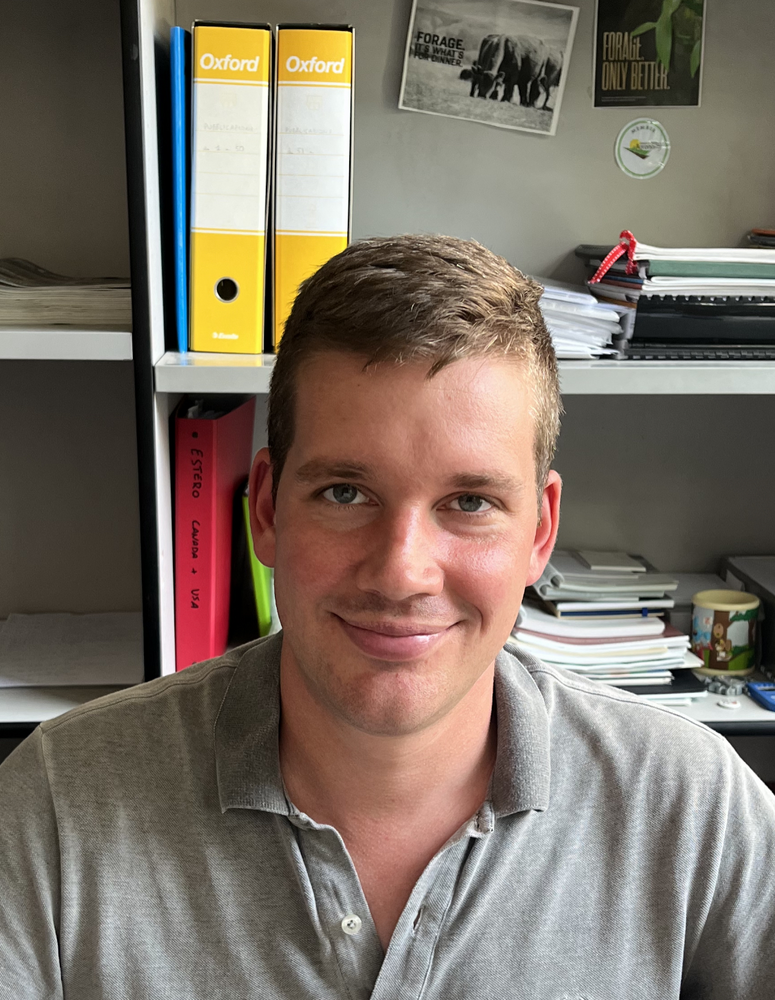
Francesco Ferrero PhD
Francesco Ferrero is Researcher at the Department of Agricultural, Forestry and Food Sciences (DISAFA) of the University of Turin. In 2017 he completed an internship at the Lethbridge Research and Development Center, Agriculture and Agri-Food Canada (Lethbridge, Alberta, Canada) and in 2018 he completed an internship at the William H Miner Agricultural Research Institute - Lallemand Animal Nutrition Forage Center of Excellence (Chazy, New York, USA). In 2020 he obtained the PhD at the University of Turin. Studies are carried out on forage farming systems and forage quality in relation to conservation processes, with particular attention to the influences on the efficiency of processes and their sustainability. He is scientific coordinator or participant of several European or national research projects. The scientific activity is documented by more than 150 printed publications, of which 23 in international peer-reviewed journal.